

Planning raised bed garden layouts
Expert help and advice from Rob Smith (Garden Writer & Veg Grower)
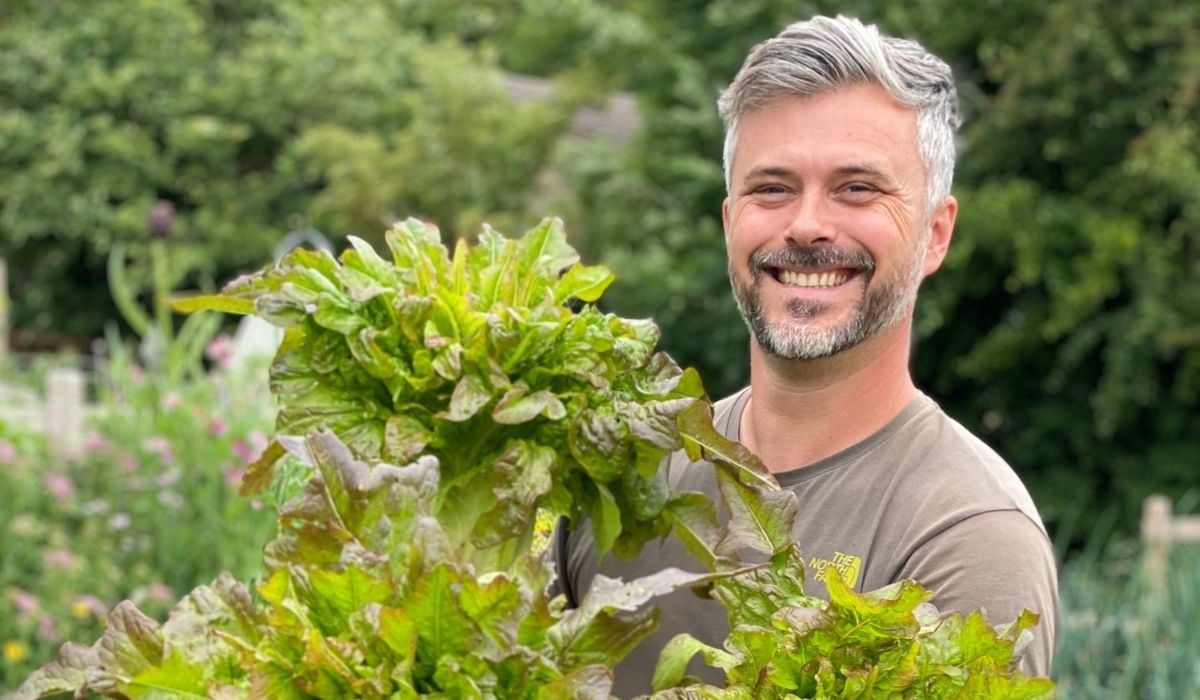
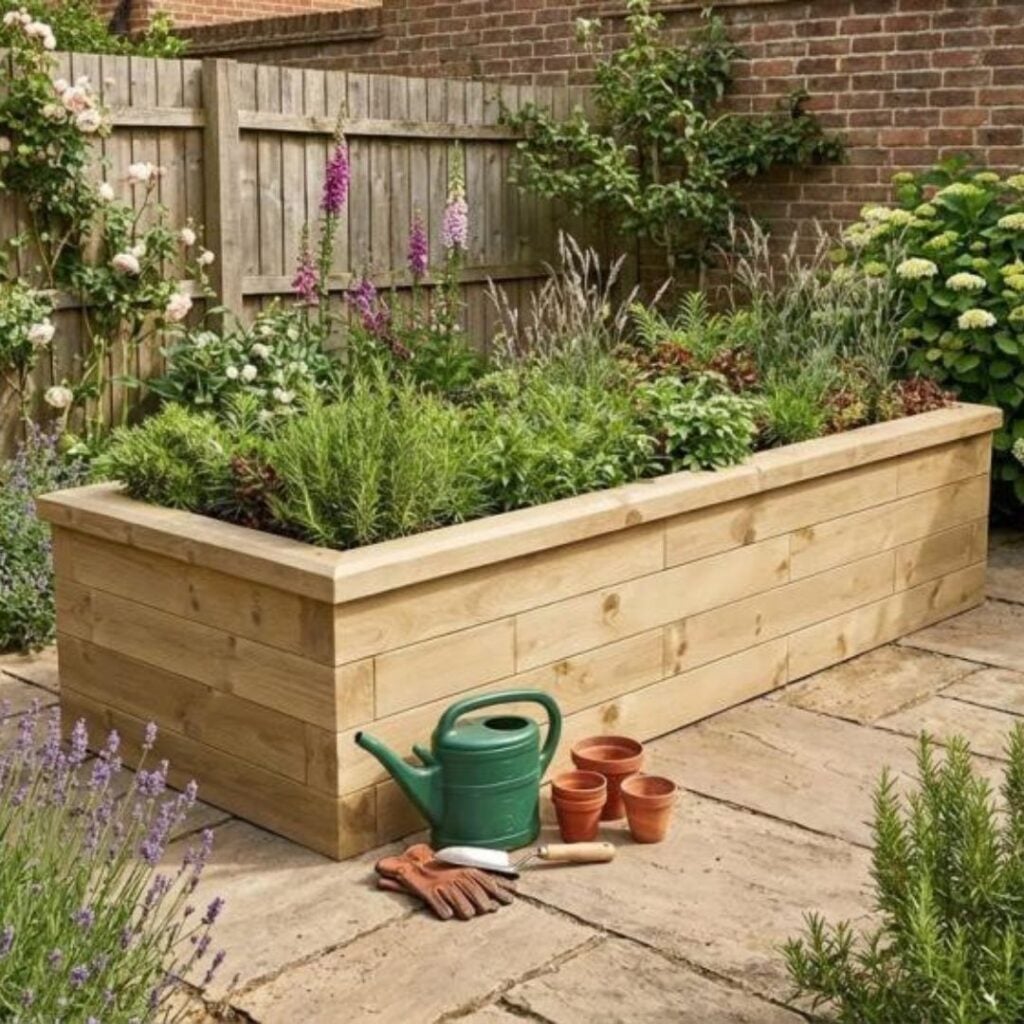
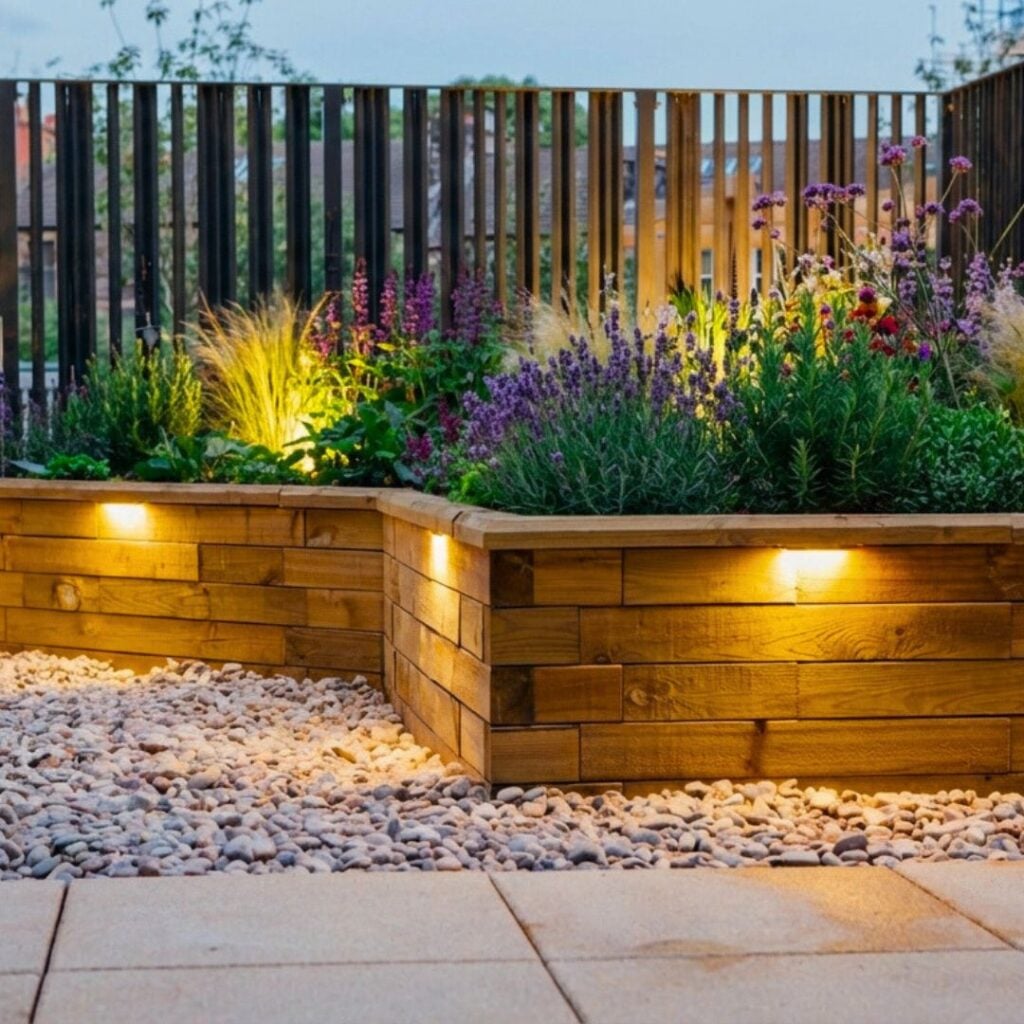
When it comes to planning raised bed garden layouts you don’t need masses of space at all; in fact raised beds can be used just about anywhere.
I thought I’d show you how you can use and create a raised bed planting plan in a small, medium or family-sized veggie patch, plus a few handy tips on how to make the most of the space and what will make your patch work better.
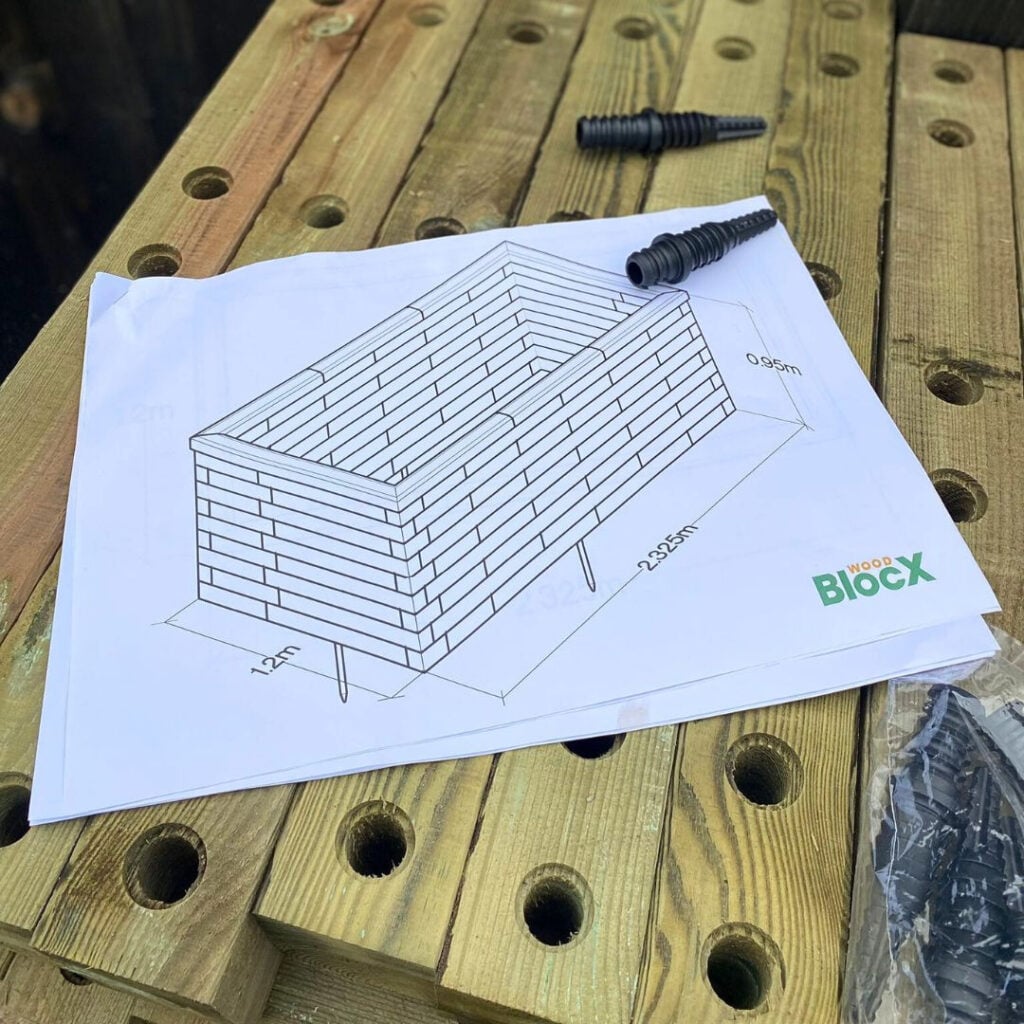
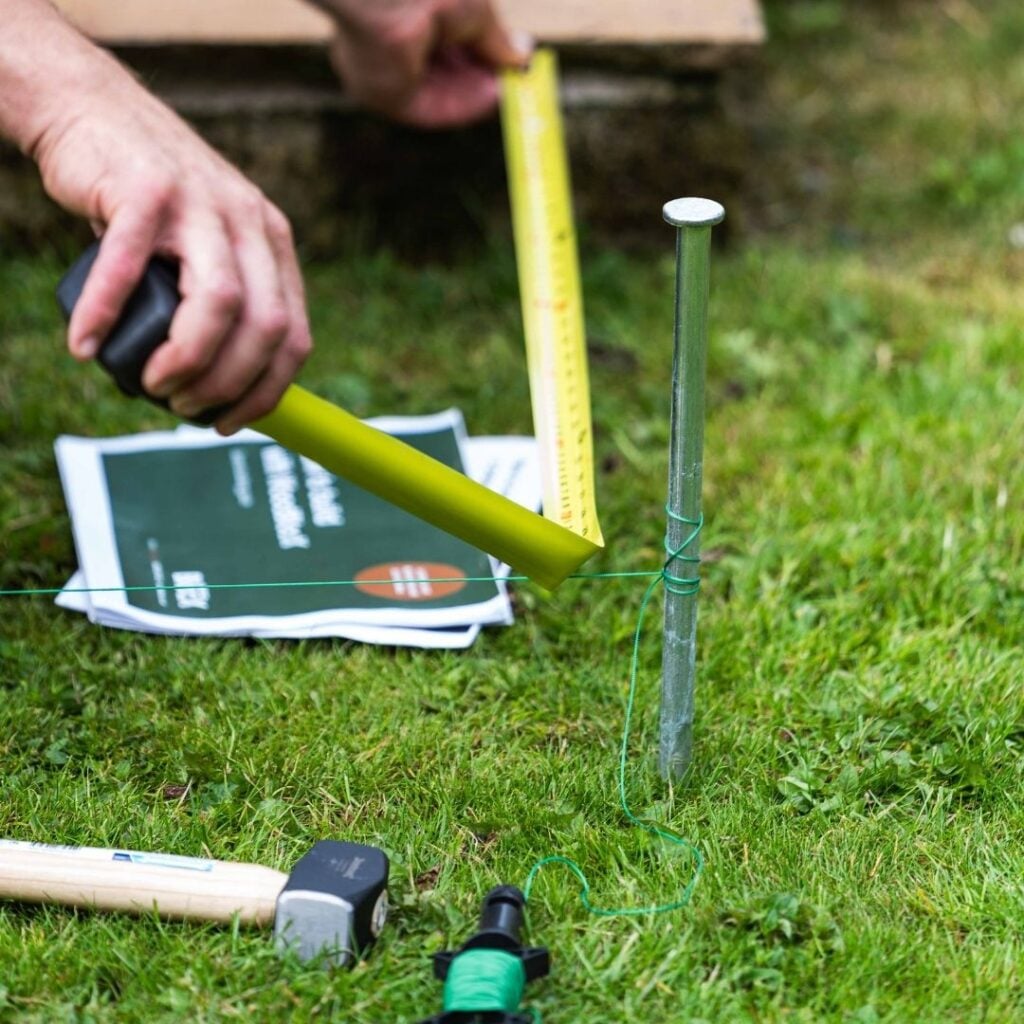
When it comes to organising a raised bed planting plan, make sure to measure your growing space and sketch your design out a few times first (VegPlotter is a good tool to use), this allows you to make changes and move things around without having to redraw your design. To make the most of the space it’s a good idea to line the perimeter with raised beds, this allows you to grow right up to the boundary and acts as a short wall at the same time. Remember you will need to get in-between the beds, so don’t put them too close together, especially if you will be carrying bags of compost or plants or even a wheelbarrow, also some plants splay over the side of beds, so you don’t want to damage them.
Planning a small raised bed garden up to 3 m²
To start with we have a small veggie patch space of only 3 meters square, this is a very small courtyard size or maybe a side garden. Remember there are many different sizes and even shapes of WoodBlocX raised beds, so go for the ones which fit your garden space the best.
For a small space I would recommend growing veg that is easy and quick to grow, in this way you will get multiple harvests from your beds throughout the year, meaning it's always productive and easy to grow in.
Planning tip
Always make sure to grow taller plants at the back of the bed furthest away from the sun, then they won’t cause shade over your other crops.
Raised beds for salad crops
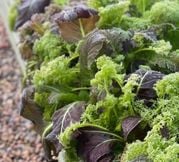
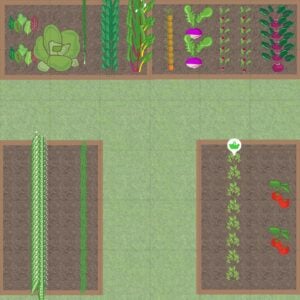
No matter the space of your garden I always have a bed for salad crops, they grow quickly and you can sow a row every few weeks to keep you in tasty salad leaves for months. You could go for lettuce, but I prefer specialist cut and come again seed mixes for small spaces, these allow you to cut the leaves several times. The same with spinach and chard, you can harvest them small to get the most from the plants. While growing leaves at one end, it's good to have a couple of rows of spring onion growing as well, they can be harvested as needed all summer.
Root vegetable raised beds
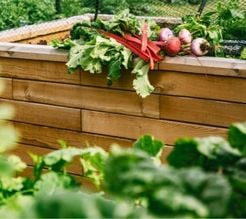
A ‘root bed’ is also a great way to use a raised bed, this is because the roots can grow nice and straight in a raised bed as there aren’t as many stones as growing in the garden. Carrots, beetroot, turnips and radish are easy to grow and can crop for months if sown little and often.
I wouldn’t be without peas and beans either, you can easily grow dwarf french beans and short pea plants in a raised bed; in fact they will be easier to harvest as you don’t have to bend down as far, perfect for easy gardening. Remember to put the peas at the back of the bed as they are taller than dwarf beans, plus they may need a few sticks for support and you don’t want to have them scratching you as you walk past the planter!
Growing tomatoes in raised beds
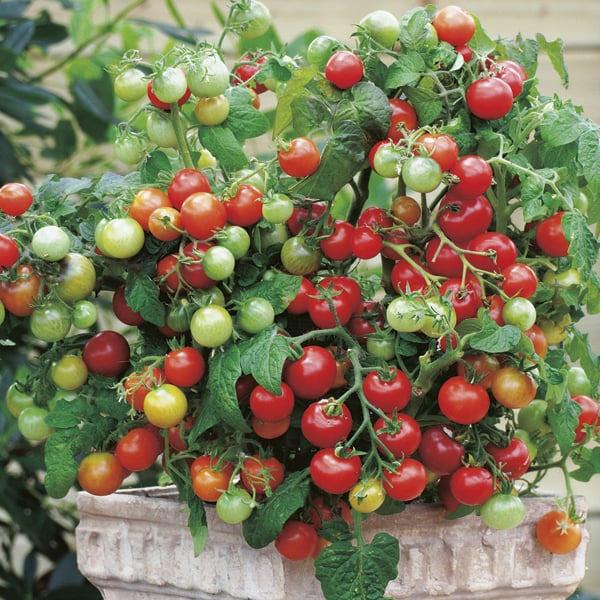
My final bed for a small garden would be one with a couple of outdoor tomatoes (preferably blight resistant) as there’s nothing like home-grown tomatoes. Edging the bed in basil will also help use valuable space, as basil and tomatoes grow well together, they also cook well together!
You also benefit from less slugs in a raised bed, as they are raised up from the ground.
Small raised bed ideas
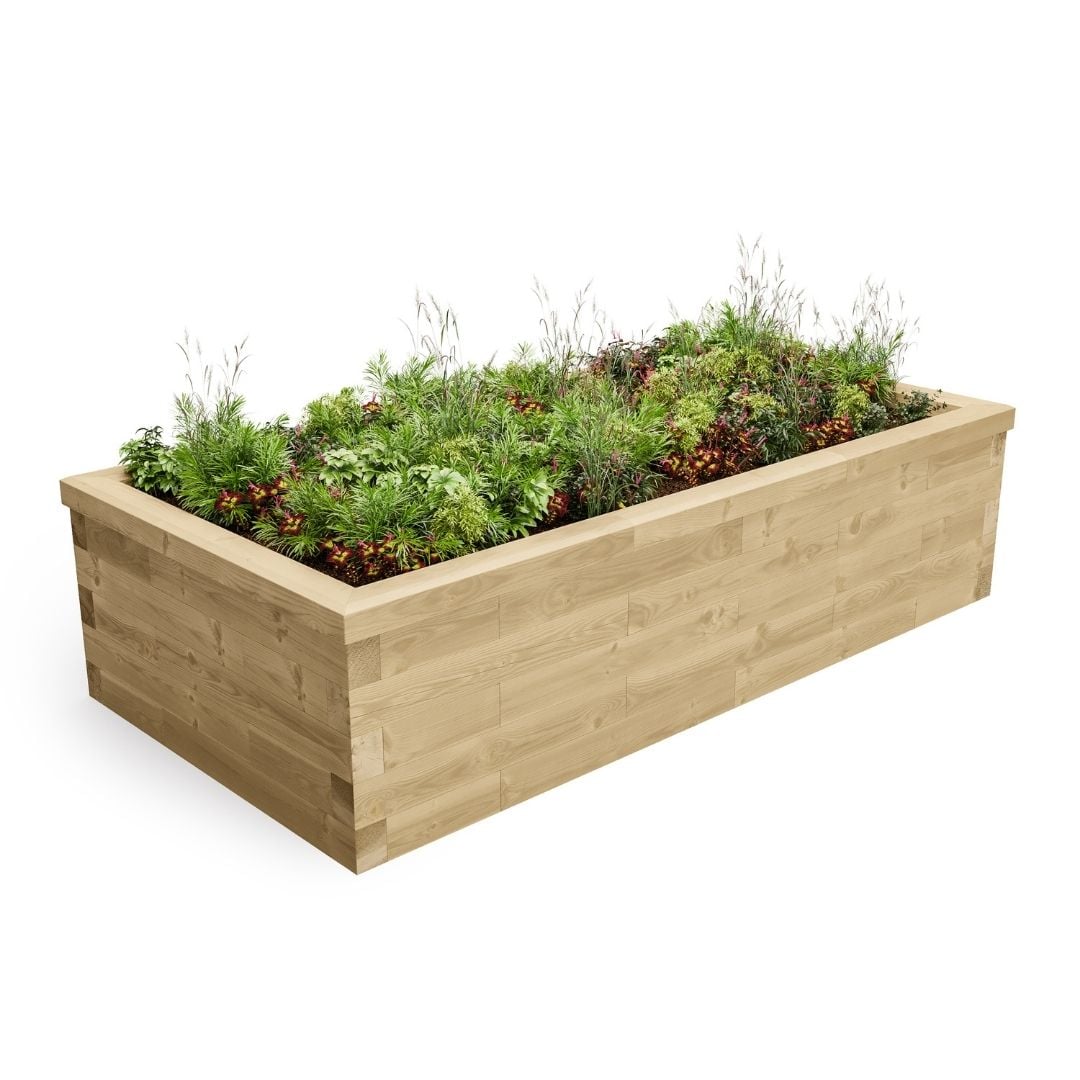
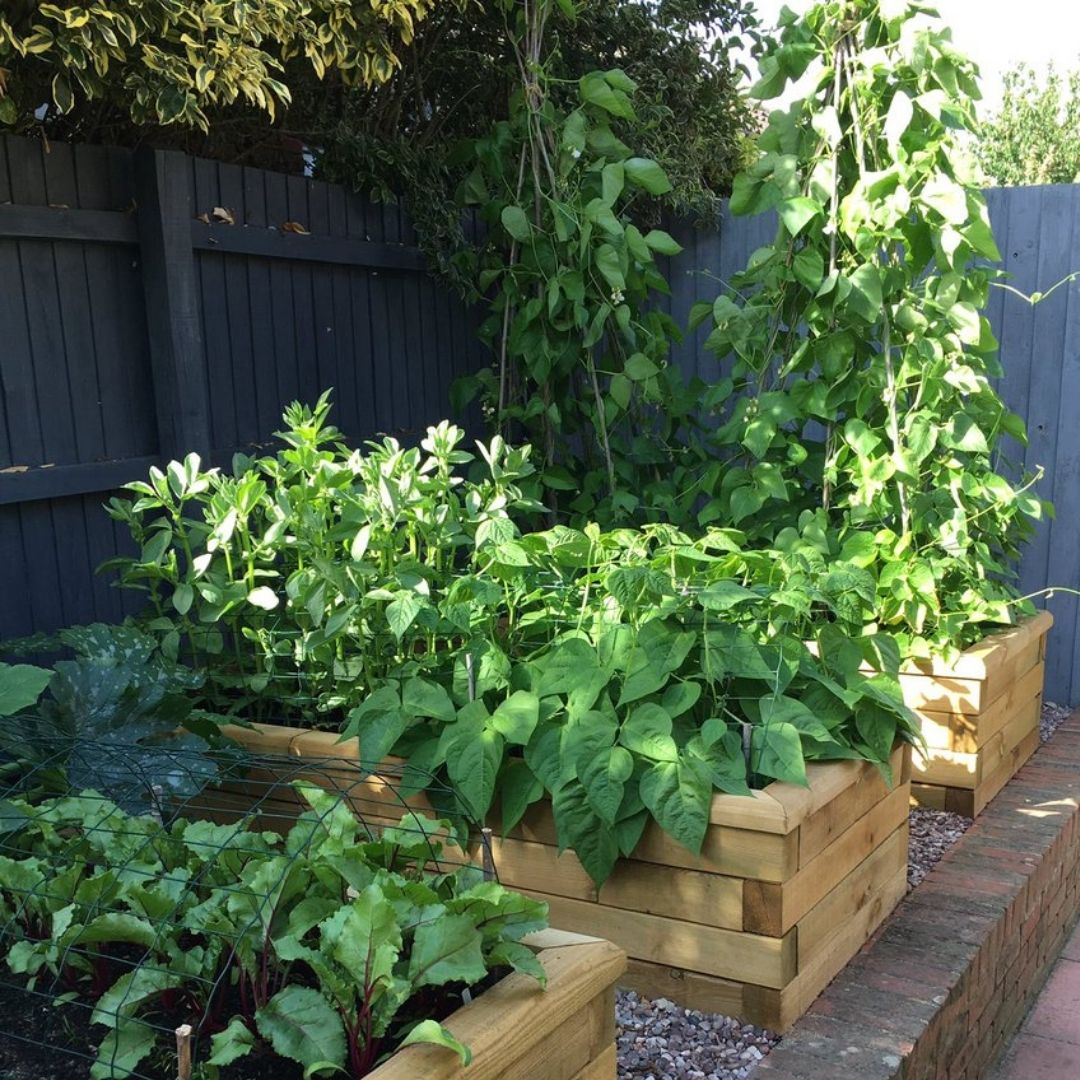
Raised bed kits of all sizes can be found on our website, or use the raised bed calculator tool to get an instant price using your own measurements.
Planning a medium sized raised bed garden 8 m² to 12 m²
If you have a medium sized veg patch (see our Customer Gardens), you’ll have a little more space for some of the more “standard” veggies like onions and potatoes, however don’t grow bog standard varieties, go for specialist ones you can’t buy in the supermarket. With onions, I like to grow pink skinned ones like ‘Isobel Rose’, plus red spring onions for something different in a sandwich or salad.
What to grow in a medium sized raised bed
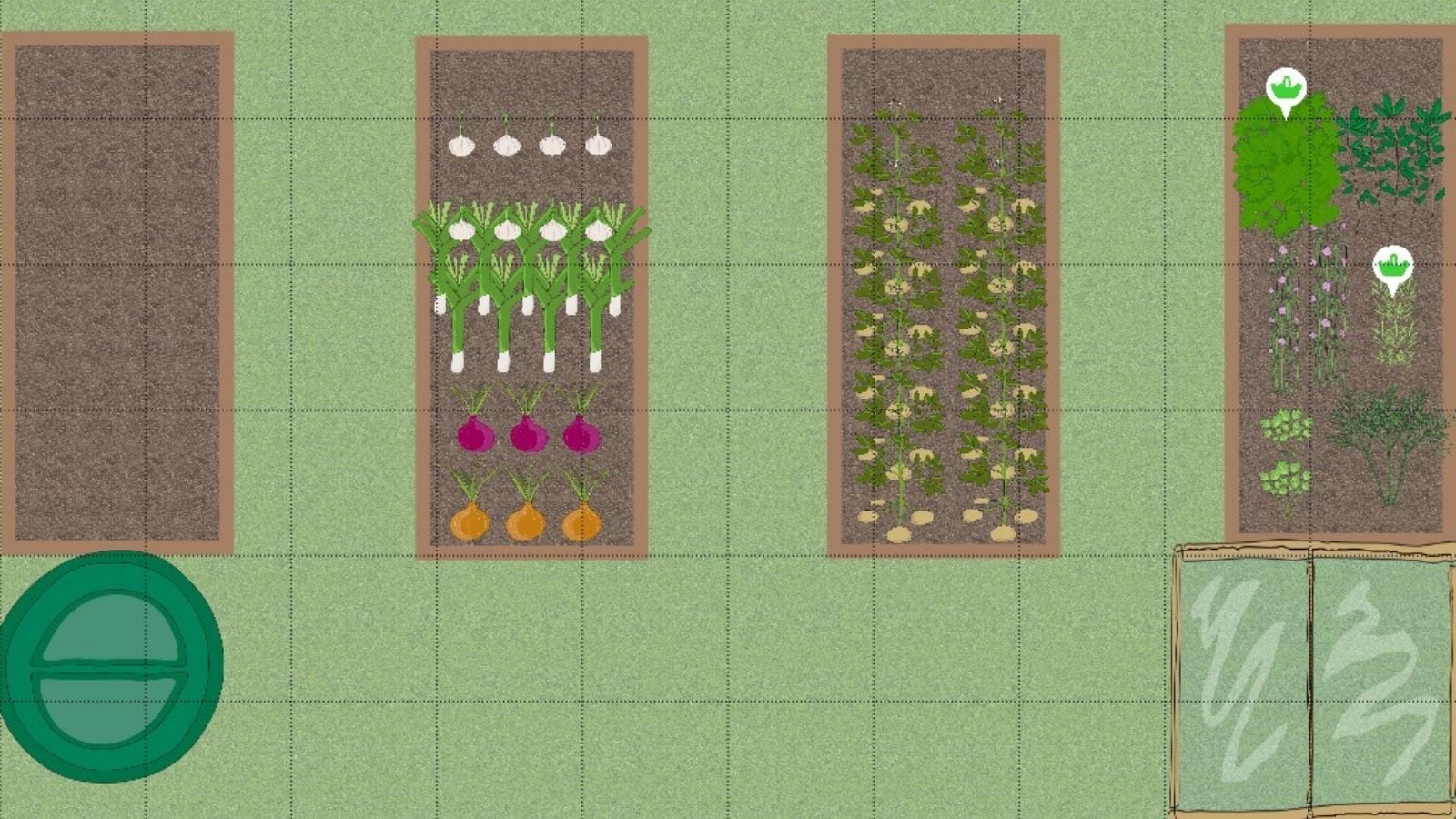
You can also grow the virtually tearless ‘Walla Walla’ onion which is perfect to cook with or eat fresh as it won’t burn your eyes. A raised bed is also a good place to grow garlic and leeks as they are pretty easy to grow and leeks can be grown and cropped for most of the year.
When it comes to potatoes, grow what you eat; so if you don’t like jacket potatoes, perhaps stay away from main crop varieties and grow the smaller and buttery salad types. You can even get red and blue potatoes if you fancy something different. When growing potatoes in a raised bed, remember to water them well, ideally with rain water.
Finally, herbs are a great set of plants to grow in a garden, they help make a good meal great, especially when they are fresh and home grown. Steer clear of mint as it can be invasive, or grow it in its own bucket at the side of a herb bed. When planting herbs, look at their final height and if they will return next year, as these are better at the back if they are tall, with more tender plants like parsley and coriander at the front.
Compost bins and greenhouses
It’s also worth having a compost bin in the garden for getting rid of the waste a veggie garden will create, it helps cut down on costs as well as allowing you to add the compost back into the beds. A small greenhouse is also a good investment if you want to grow more from seed or use it for more tender veg like cucumbers. However be careful with ventilation as the temperature in a small greenhouse can increase very quickly, resulting in damaged plants.
Medium raised bed ideas
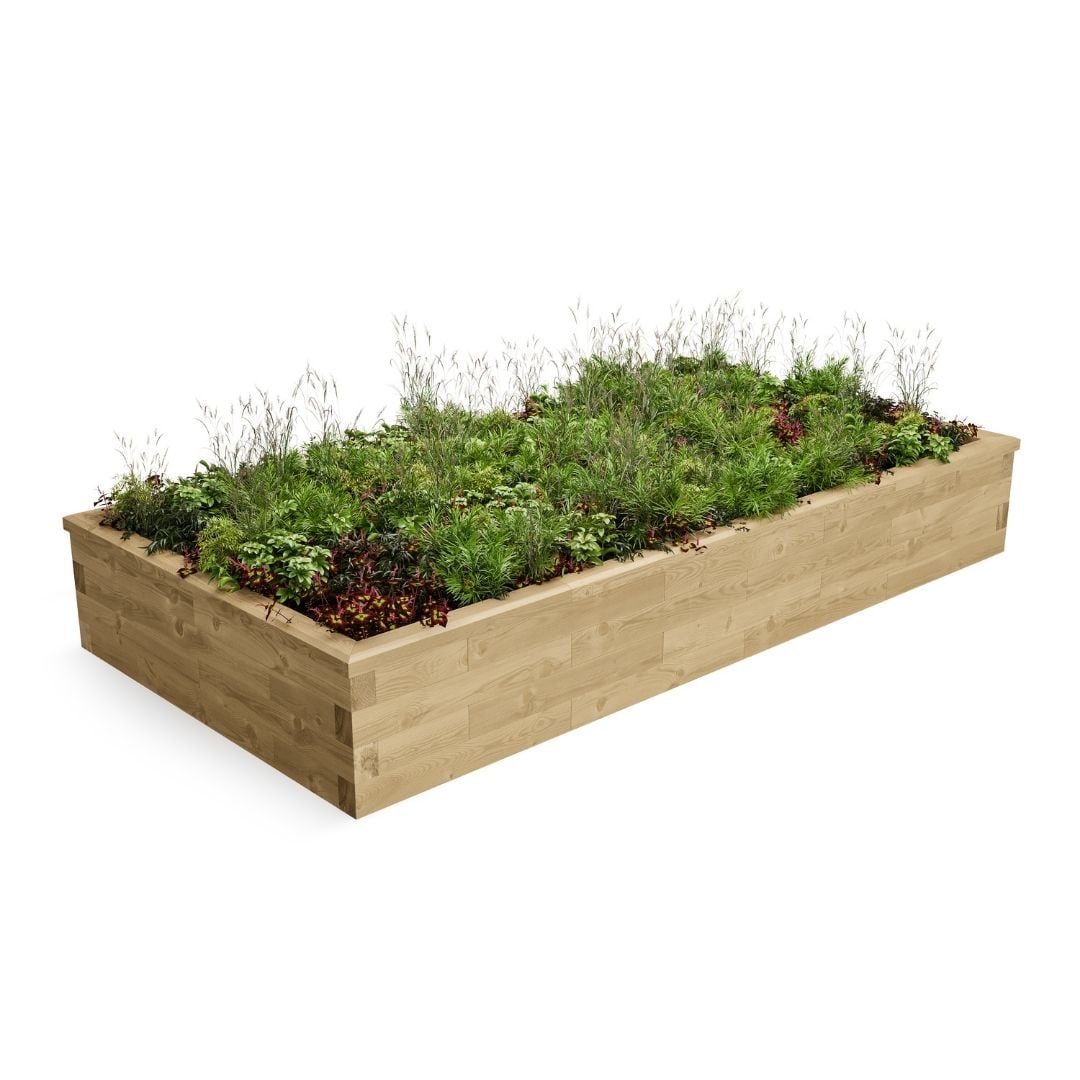
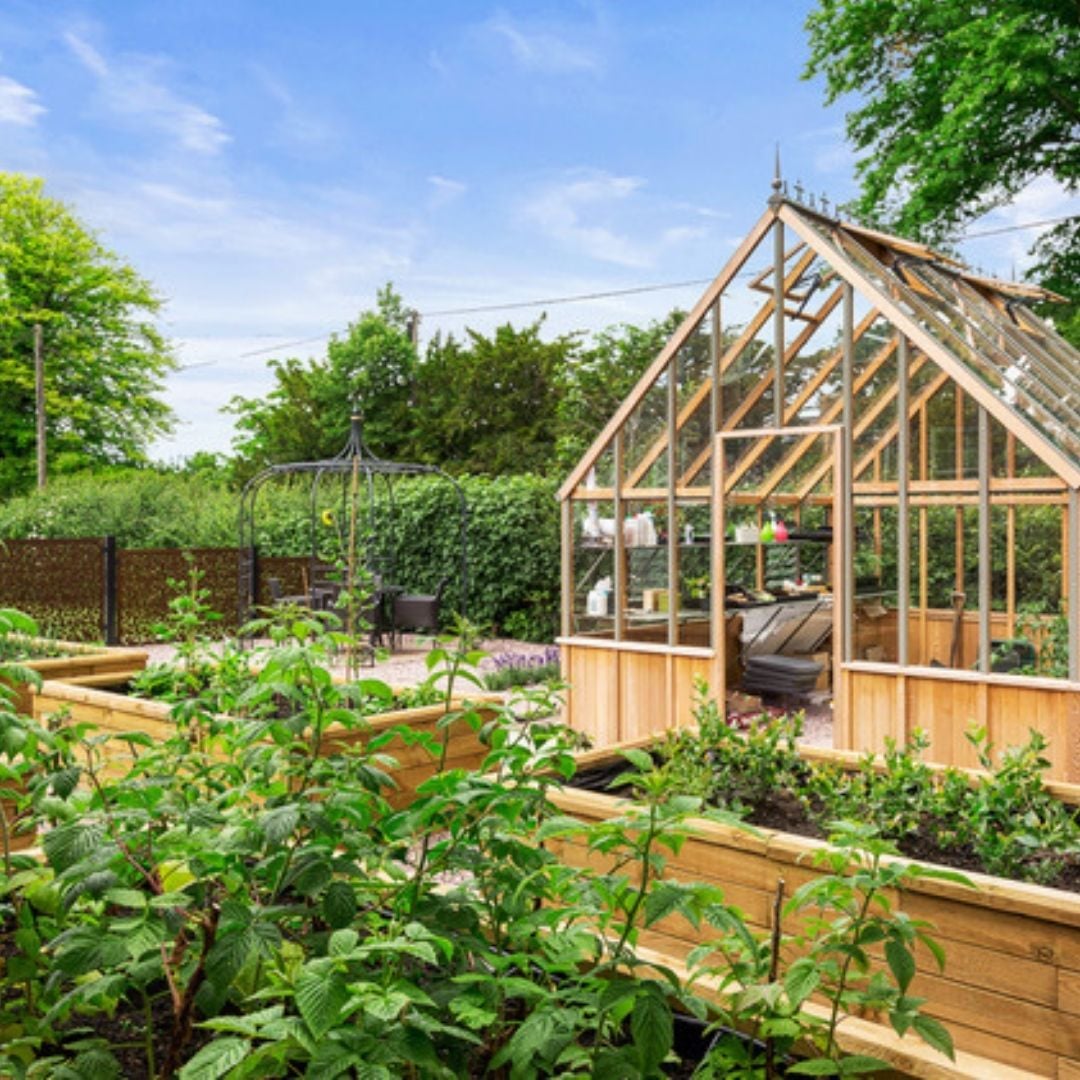
Raised bed kits of all sizes can be found on our website, or use the raised bed calculator tool to get an instant price using your own measurements.
Planning a large raised bed garden 12 m² and more
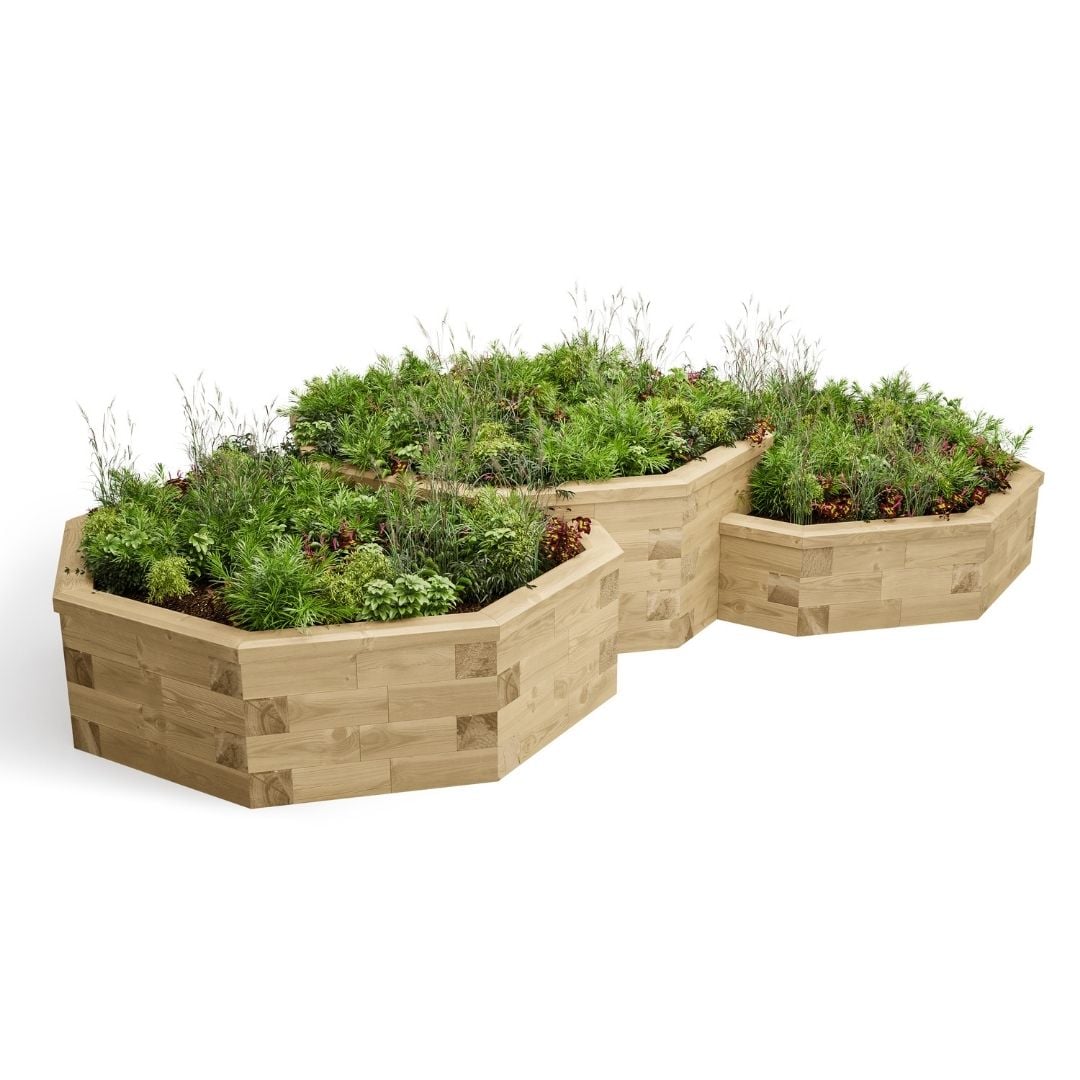
More space means you can really get creative with a raised bed vegetable garden layout. When it comes to a family sized veg garden it's a good idea to make it look good as well as productive, otherwise you run the risk of it looking like you have an allotment in the back garden. Try angling the beds slightly to give interest, rather than straight rows; It’s also good to give a focal point to a garden with a different sized bed like the WoodBlocX circular raised bed, this can be used for a fruit tree to give structure, then underplanted with strawberries or flowers for some interest and to feed the bees.
Now you have space for a larger greenhouse and shed, you’ll also benefit from water butts to save water and money, plus a small fruit cage or fruit area where you can grow currants, blueberries and other berries under cover, protecting them from birds. Another veg (which we eat as a fruit) that is great in a garden as it comes back every year, is rhubarb! Give this plant its own little bed or plant by the compost heap and it will reward you with lots of tangy stems for years to come.
Go large
Since there is more space in a bigger veg patch, you can go for larger veggies like cabbages, cauliflower and squashes. Squash can be grown down the side of any bed and allowed to scramble on the floor, or go for a smaller bush shaped plant to save space. When you have this amount of space, you are limited only by what you want to grow and eat, so make a list and get growing!
Large raised bed ideas
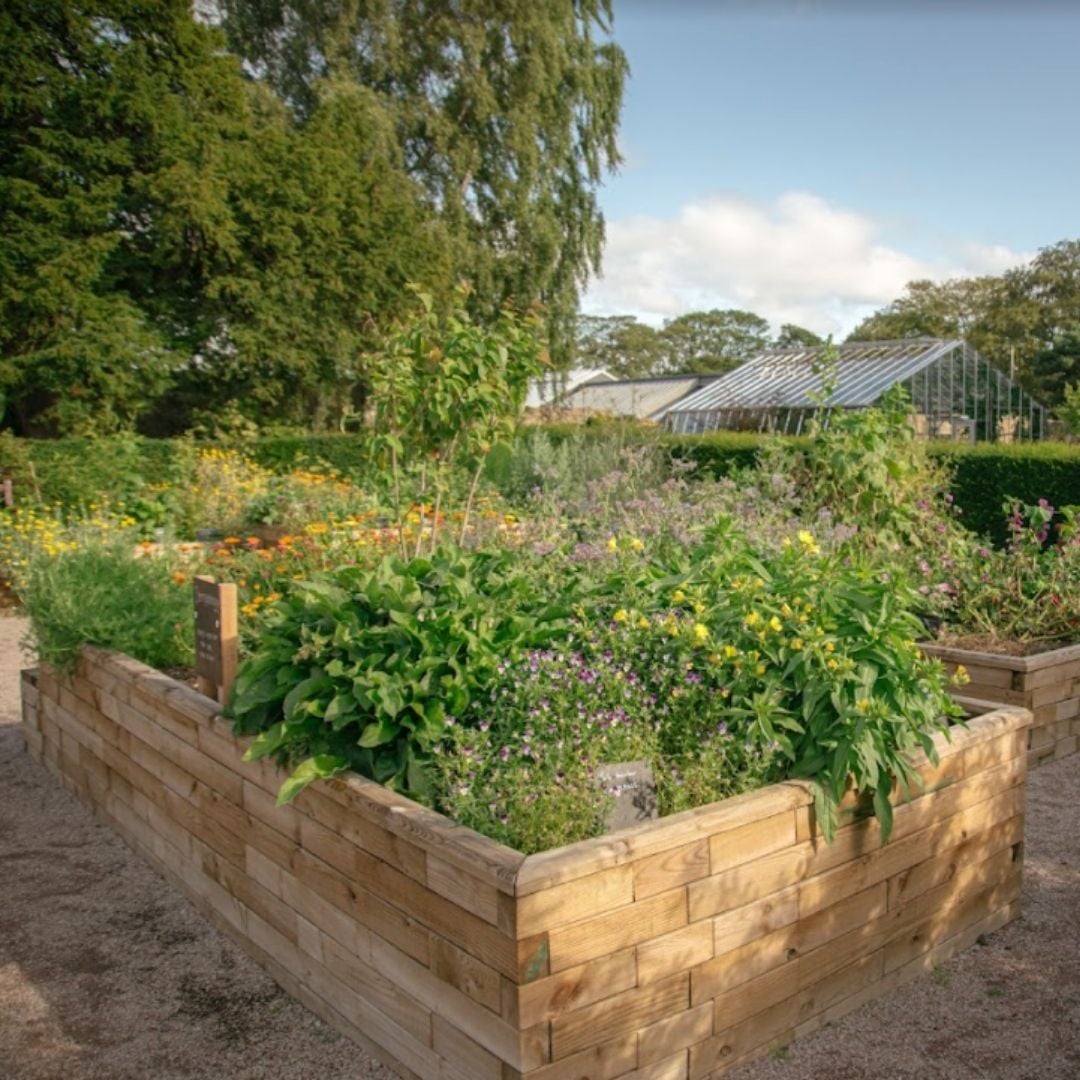
Raised bed kits of all sizes can be found on our website, or use the raised bed calculator tool to get an instant price using your own measurements.